
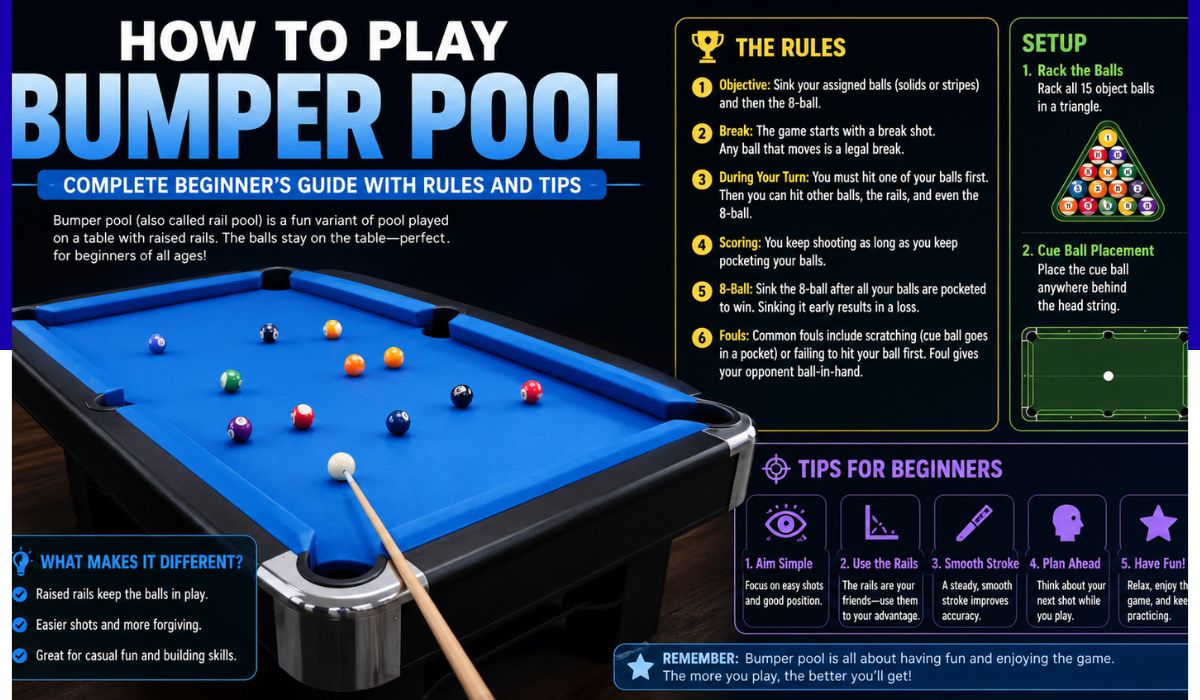
Introduction To Bumper Pool
Bumper Pool is a simple yet highly strategic cue sport that offers a refreshing twist on traditional billiards. Unlike standard pool, which uses a large table and multiple pockets, Bumper Pool is played on a smaller table with only two pockets and several fixed bumpers placed in the middle. These bumpers change the direction of every shot, making accuracy and planning more important than power.
The game is popular in homes, game rooms, and casual recreational spaces because it is easy to learn but still challenging to master. Players of all ages enjoy it since matches are usually fast, competitive, and full of unexpected rebounds.
In this complete beginner’s guide, you will learn everything about Bumper Pool including setup, rules, gameplay flow, strategies, fouls, and winning tips. Whether you are completely new or just want to improve your skills, this guide will help you understand the game in a clear and practical way.
Quick Bio Information About Bumper Pool
Bumper Pool Origin Traditional Cue Sport Variation Inspired by Classic Pool Games
Table Type Compact Rectangular Or Octagonal Design
Number Of Pockets Two Opposite Side Pockets Only
Total Balls Ten Balls In Two Colors
Players One Vs One Or Team Play Option
Key Feature Fixed Bumpers In Central Table Area
Marked Ball Requirement Must Be Pocketed First
Gameplay Style Bank Shots And Angle-Based Strategy
Skill Level Beginner Friendly But Strategically Deep
Shot Rules Direct And Bank Shots Allowed No Jump Shots
Game Duration Usually Short And Fast Paced
Winning Condition Pocket All Five Balls First
Penalty System Includes Ball Reposition And Bonus Penalties
Popular Settings Home Game Rooms And Recreation Centers
Strategy Focus Angle Control And Defensive Positioning
Difficulty Progression Easy To Learn Hard To Master
Core Skill Required Precision And Shot Planning
Game Variation Casual And Competitive Rule Sets
Understanding Bumper Pool Basics
Bumper Pool is played on a compact rectangular or octagonal table designed with built-in obstacles called bumpers. These bumpers sit in the middle of the table and act like rebound points that redirect the balls during play.
Each table has two pockets placed on opposite sides, usually centered along the rail. Players use a set of five red balls and five white balls, with one marked ball in each set. The marked ball is important because it must be pocketed first before the rest of the balls can be legally sunk.
The main objective of the game is simple. Each player tries to sink all of their balls into their designated pocket on the opposite side of the table before their opponent does. While the concept sounds easy, the bumpers create unpredictable angles that make every shot unique.
Equipment Used In Bumper Pool
A standard Bumper Pool setup includes a specially designed table, cue sticks, and ten balls divided into two colors. The table surface is similar to a pool table, covered in felt to ensure smooth ball movement.
The bumpers inside the table are fixed and cannot be moved. These bumpers are arranged in a cross formation, creating narrow pathways and limited shooting angles. This design is what makes the game more strategic compared to regular pool.
The balls used are smaller than standard billiard balls in many cases, depending on the table size. One ball from each set is marked with a dot or symbol, which identifies it as the starting ball that must be pocketed first.
Bumper Pool Table Setup Explained
Before starting the game, each player arranges their balls on their side of the table. Five balls are placed near each player’s pocket, usually in a symmetrical pattern.
The marked ball is placed directly in front of the player’s home pocket. The remaining four balls are positioned evenly on both sides near the rails. This setup ensures both players start with equal opportunity and balanced positioning.
The bumpers in the center of the table form a cross shape, leaving a small open space in the middle. This opening is often used for strategic shots and rebounds. Once the setup is complete, the game is ready to begin.
Objective Of The Game
The main goal in Bumper Pool is to pocket all five of your balls into your opponent’s pocket on the opposite side of the table. The marked ball must be sunk first before any other ball can be legally played.
This rule adds an extra layer of strategy because players must plan their opening move carefully. Once the marked ball is successfully pocketed, players gain more freedom in choosing which balls to target next.
Winning requires both precision and planning, as players must navigate the bumpers while controlling angles and rebounds effectively.
How To Start A Bumper Pool Game
The game begins with both players shooting their marked balls at the same time. This simultaneous start is one of the most unique features of Bumper Pool.
Each player aims to bank their marked ball off the right cushion and into their designated pocket. The use of the rail is required, which means direct shots are not allowed in this opening move.
If both players successfully pocket their marked balls, they continue shooting another ball at the same time. If only one player succeeds, that player gains control of the next turn.
The opening shot often sets the tone for the entire match, making it a critical moment in the game.
Turn Structure And Gameplay Flow
After the opening shot, the flow of the game depends on success or failure. A player continues their turn as long as they successfully pocket balls. This creates momentum and rewards accuracy.
If a player misses a shot, their turn ends immediately, and control passes to the opponent. This back-and-forth structure keeps the game dynamic and competitive.
Because there are only five balls per player, every shot matters. A single mistake can shift the advantage quickly, especially in close matches.
Key Bumper Pool Rules
Bumper Pool follows a set of simple but important rules that define how the game is played.
The marked ball must always be pocketed first before any other balls can be legally scored. Jump shots are not allowed, which keeps the game focused on controlled, ground-level shots.
Players are allowed to hit any ball directly without needing a cue ball system like traditional pool. This makes the game more flexible but still requires careful aim.
If a ball leaves the table, it is usually returned to play in a central position, depending on house rules. These rules help maintain fairness and keep gameplay consistent.
Fouls And Penalties Explained
Fouls in Bumper Pool can have a major impact on the outcome of the game. If a player sinks their own ball in the wrong pocket, their opponent may be rewarded with additional advantages, such as pocketing extra balls.
If the final ball is sunk into the wrong pocket, the player immediately loses the game. This makes accuracy extremely important, especially during the final stages.
Sinking an opponent’s ball does not result in a penalty, but the ball is still considered legally pocketed. If a ball is knocked off the table, the opponent is allowed to reposition it, often in a neutral or central location.
These penalties encourage careful planning and discourage reckless shots.
Winning Strategies In Bumper Pool
Success in Bumper Pool depends heavily on strategy rather than power. One of the most effective techniques is using bank shots. Since bumpers dominate the table, direct shots are often blocked, making rebounds essential.
Controlling shot strength is also important. Soft, controlled shots are usually more accurate than aggressive ones. Players who focus on precision tend to perform better over time.
Defensive play is another key strategy. Blocking opponent paths with your balls can limit their options and force mistakes. Positioning becomes just as important as scoring.
Players who learn to think ahead and plan multiple shots in advance often gain a significant advantage.
Advanced Techniques And Skill Development
As players improve, they begin to understand the importance of angles and rebound control. Reading how a ball will move after hitting a bumper is a critical skill.
Advanced players also use bumpers strategically to set up future shots. Instead of simply aiming for the pocket, they plan how each shot will position their next move.
Cue control becomes essential at this level. A light and steady grip allows for better accuracy and consistency. Over time, experienced players develop a strong sense of distance, force, and timing.
Common Beginner Mistakes
Many beginners struggle with hitting the ball too hard, which often leads to poor control and missed opportunities. Another common mistake is ignoring the role of bumpers and trying to play the game like regular pool.
Some players also forget the importance of the marked ball rule, which can lead to penalties or lost turns. Others fail to plan ahead, focusing only on the current shot instead of the overall game strategy.
Avoiding these mistakes early can significantly improve performance and enjoyment.
Final Thoughts On Bumper Pool
Bumper Pool is a unique and engaging cue sport that blends simplicity with strategy. While the rules are easy to understand, the presence of bumpers transforms every shot into a thoughtful decision. This balance makes it enjoyable for beginners while still challenging for experienced players.
With practice, players can develop strong control over angles, improve their accuracy, and learn how to use the bumpers to their advantage. Whether played casually at home or more competitively, Bumper Pool offers a fun and rewarding experience that keeps players coming back for more.
FAQs About Bumper Pool
What Is Bumper Pool And How Is It Different From Regular Pool
Bumper Pool is a cue sport played on a small table with only two pockets and fixed bumpers in the center. Unlike regular pool, which uses multiple pockets and open space, Bumper Pool focuses heavily on bank shots and angle control. The bumpers make direct shots less common and increase the importance of strategy.
How Do You Win In Bumper Pool
A player wins by successfully pocketing all five of their balls into the opponent’s pocket before the opponent does. The marked ball must be pocketed first, and every shot must be planned carefully due to the bumpers limiting direct paths.
Can You Hit Any Ball In Bumper Pool
Yes, unlike traditional pool, any ball can be struck directly in Bumper Pool. There is no separate cue ball system. This allows more flexibility but also requires careful control to avoid mistakes.
What Happens If A Ball Leaves The Table
If a ball leaves the table, it is usually returned to play and placed in a central area depending on house rules. The opponent may also gain a strategic advantage in some versions of the game.
Are Jump Shots Allowed In Bumper Pool
No, jump shots are not allowed. All shots must stay on the table surface, making the game more controlled and focused on angles and rebounds.
Why Are Bumpers Important In The Game
Bumpers are essential because they change the direction of every shot. They create unpredictable angles, making the game more strategic and requiring players to think ahead before every move.
Is Bumper Pool Easy For Beginners
Yes, Bumper Pool is easy to learn because of its simple rules and small table size. However, mastering it takes time because success depends on precision, angles, and strategic planning.
Recommended For You: Chivas Football Jersey Guide: Best Home, Away, And Authentic Kits For Fans