
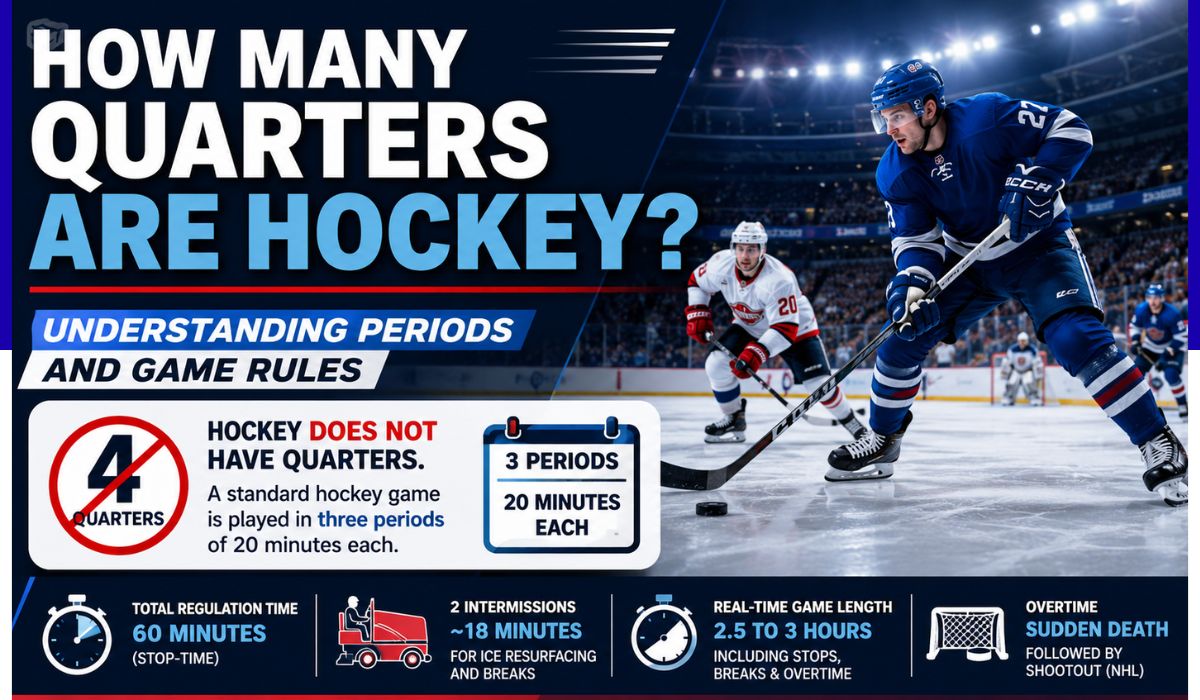
Many New Sports Fans Ask The Same Question: “how many quarters in hockey?” The Confusion Makes Sense Because Popular Sports Like Basketball And Football Use Quarters To Divide The Game Into Sections. Hockey, However, Follows A Completely Different Structure. Instead Of Four Quarters, Hockey Games Are Played In Three Periods. This Unique Format Has Been Part Of The Sport For More Than A Century And Plays A Huge Role In The Speed, Strategy, And Excitement That Hockey Fans Love.
Understanding Hockey Periods Is Important Whether You Are Watching Your First NHL Match, Attending A Local Game, Or Simply Learning About Sports Rules In 2026. Hockey Moves Fast, And Knowing How The Clock Works Makes The Experience Much More Enjoyable. From Intermissions And Overtime To Youth Hockey Rules And Shootouts, The Structure Of The Game Influences Every Part Of The Sport.
This Complete Guide Explains Everything You Need To Know About Hockey Periods, Game Timing, Overtime Rules, And The Reasons Hockey Does Not Use Quarters. By The End, You Will Understand Hockey Like A Real Fan.
Quick Bio Information
| Hockey Fact | Details |
|---|---|
| Official Game Structure | 3 Periods |
| Length Of Each Period | 20 Minutes |
| Total Regulation Time | 60 Minutes |
| Number Of Intermissions | 2 |
| NHL Intermission Length | About 18 Minutes |
| Real-Time Game Duration | Around 2.5 To 3 Hours |
| Overtime Style | Sudden Death |
| NHL Regular Season Overtime | 5 Minutes |
| Playoff Overtime | Unlimited Sudden Death Periods |
| Common Youth Hockey Period Length | 10 To 15 Minutes |
| High School Hockey Period Length | Usually 17 Minutes |
| Main Reason For Periods | Better Ice Quality |
| First Use Of Three Periods | 1910 |
| Hockey Clock Type | Stop-Time |
| Most Popular Hockey League | NHL |
| Ice Resurfacing Machine | Zamboni |
| Number Of Players Per Team On Ice | 6 Including Goalie |
| Hockey Term For Game Sections | Periods |
| Sport Compared Most Often | Basketball |
| Typical NHL Season | 82 Games |
Does Hockey Have Quarters?
The Simple Answer Is No. Hockey Does Not Have Quarters. Standard Ice Hockey Games Are Divided Into Three Periods Instead Of Four Quarters. Each Period Lasts 20 Minutes Of Stop-Time Play, Creating A Total Regulation Time Of 60 Minutes.
This Three-Period System Is Used In The NHL, International Hockey, Olympic Hockey, And Most Professional Leagues Around The World. When People Search For “How Many Quarters Are Hockey,” They Are Usually Trying To Compare Hockey To Sports Like Basketball Or American Football. However, Hockey Has Its Own Unique Rhythm And Structure.
The Word “Period” Is One Of The Most Common Terms In Hockey. Fans, Commentators, And Coaches Always Refer To The First Period, Second Period, And Third Period Rather Than Quarters Or Halves. Using The Correct Term Helps New Fans Sound More Familiar With The Sport.
Why Hockey Uses Periods Instead Of Quarters
Hockey Did Not Always Use Three Periods. In The Earliest Organized Games During The Late 1800s, Teams Played Two Long Halves. However, Ice Conditions Became A Serious Problem. After Thirty Minutes Of Continuous Skating, The Ice Surface Was Covered In Snow, Deep Ruts, And Scratches That Slowed Down The Puck And Made Skating Difficult.
In 1910, Hockey Pioneers Lester Patrick And Frank Patrick Introduced The Three-Period Format In The Pacific Coast Hockey Association. Their Goal Was Simple: Improve Ice Quality And Keep The Game Fast. By Adding More Breaks Between Play, Arena Workers Had Extra Time To Repair And Smooth The Ice.
The Change Worked Extremely Well. The Faster Ice Improved Passing, Shooting, And Skating, Making Hockey More Exciting For Players And Fans. Soon After, Other Professional Leagues Adopted The Same Format, Including The NHL. More Than A Hundred Years Later, The Three-Period Structure Remains A Core Part Of Hockey.
How Long Is A Hockey Period?
Each Hockey Period Lasts 20 Minutes On The Official Game Clock. However, Hockey Uses Stop-Time Rules, Which Means The Clock Stops Whenever Play Stops. Because Of This, A Hockey Game Lasts Much Longer In Real Life Than The Clock Suggests.
The Clock Stops For Many Reasons. Common Stoppages Include Goals, Penalties, Offside Calls, Icing Violations, Injured Players, And The Puck Leaving The Playing Area. Professional Leagues Also Pause The Game For Television Commercial Breaks.
As A Result, One 20-Minute Hockey Period Usually Takes Between 35 And 45 Minutes Of Real Time To Complete. A Full NHL Game Normally Lasts About Two And A Half To Three Hours From Start To Finish.
This Stop-Time System Is One Reason Hockey Feels Intense And Dramatic. Every Second Matters, Especially During Close Games Late In The Third Period.
Understanding Hockey Intermissions
Between Each Period, Teams Leave The Ice For An Intermission. These Breaks Are Extremely Important In Hockey Because They Allow Arena Staff To Resurface The Ice Using A Zamboni Machine.
Fresh Ice Creates Faster And Safer Gameplay. Smooth Ice Helps Players Skate More Quickly, Improves Passing Accuracy, And Allows The Puck To Glide Properly Across The Surface. Without Regular Ice Maintenance, The Playing Surface Would Become Rough And Dangerous.
NHL Intermissions Usually Last Around 18 Minutes During Televised Games. Fans Often Use This Time To Buy Food, Watch Entertainment, Or Discuss The Game. Players Use The Break To Rest, Hydrate, And Receive Coaching Adjustments Before The Next Period Begins.
The Intermission System Is One Of The Biggest Reasons Hockey Never Switched To Quarters. Adding More Breaks Would Slow The Game Too Much And Interrupt The Natural Flow Of Play.
Why Hockey Games Feel Longer Than 60 Minutes
New Fans Often Wonder Why A 60-Minute Hockey Game Takes Nearly Three Hours To Finish. The Main Reason Is The Stop-Time Clock. Unlike Soccer, Where The Clock Continues Running During Most Stoppages, Hockey Stops The Clock Frequently.
Commercial Breaks Also Extend The Length Of NHL Games. Television Networks Schedule Multiple Media Timeouts During Each Period. These Short Breaks Help Players Recover During Fast-Paced Action While Also Supporting Broadcasting Revenue.
Penalties And Video Reviews Add Additional Time. In Modern Hockey, Officials Can Review Certain Plays Using Video Technology To Ensure Accurate Decisions. This Has Improved Fairness In The Sport But Also Increased Overall Game Length Slightly.
Despite The Longer Real-Time Experience, Most Fans Appreciate The Structure Because It Keeps Hockey Fast, Competitive, And Exciting From Beginning To End.
Overtime Rules In Hockey
When A Hockey Game Is Tied At The End Of Regulation, Overtime Begins. Overtime Rules Differ Depending On The League And Competition.
In The NHL Regular Season, Teams Play A Five-Minute Sudden-Death Overtime Period With Three Skaters Per Side Instead Of Five. This Open-Ice Format Creates More Scoring Chances And Exciting End-To-End Action.
If No Team Scores During Overtime, The Game Moves To A Shootout. In A Shootout, Players Take Turns Attempting One-On-One Scoring Chances Against The Goalie. The Team With More Goals Wins The Game.
Playoff Hockey Uses A Completely Different System. NHL Playoff Games Continue With Full 20-Minute Sudden-Death Overtime Periods Until Someone Scores. Some Playoff Games Have Lasted More Than Five Hours Due To Multiple Overtime Periods.
Hockey Periods Vs Quarters In Other Sports
Basketball And Football Use Four Quarters Because Their Playing Surfaces Do Not Require Constant Maintenance Like Ice Hockey. Basketball Courts And Football Fields Can Handle Longer Continuous Play Without Affecting Game Quality.
Hockey’s Three-Period Format Creates A Different Pace And Strategy. Coaches Manage Player Energy Carefully Because Hockey Requires Constant High-Speed Skating. Frequent Player Substitutions, Known As Line Changes, Happen Throughout The Game.
Another Unique Feature Is The “Long Change” During The Second Period. Teams Switch Ends After Every Period, Which Means The Bench Is Farther From The Defensive Zone During The Second Period. This Makes Line Changes More Difficult And Often Leads To More Scoring Opportunities.
Compared To Sports With Quarters, Hockey Feels More Fluid And Continuous Despite Frequent Stoppages.
Youth Hockey And Amateur Hockey Rules
Not Every Hockey League Uses The Exact Same Timing Rules As The NHL. Youth Hockey Leagues Often Shorten Periods To Fit Within Ice Rental Schedules And Match Younger Players’ Energy Levels.
Young Children Commonly Play Three 10-Minute Or 12-Minute Periods. Older Youth Divisions May Use 15-Minute Periods. Many High School Hockey Games In The United States Feature 17-Minute Periods.
Adult Recreational Leagues Sometimes Use Running Clocks Instead Of Stop-Time Clocks. In Running Clock Hockey, The Clock Continues Moving Even During Minor Stoppages. This Helps Games Finish Faster And Reduces Arena Costs.
International Tournaments Also Adjust Timing Rules Depending On Age Groups And Competition Levels. Despite These Differences, The Three-Period Structure Remains Standard Across Most Forms Of Hockey.
The Role Of The Hockey Clock
The Hockey Clock Plays A Major Role In Game Strategy. Coaches And Players Constantly Watch The Clock To Decide When To Attack, Defend, Or Make Substitutions.
Late In Close Games, Teams Often Pull Their Goalie For An Extra Attacker. This Risky Strategy Creates Better Scoring Chances But Leaves The Net Empty. The Decision Usually Happens During The Final Two Minutes Of The Third Period.
Clock Management Becomes Even More Important During Penalties. Teams On The Power Play Try To Use Time Efficiently To Create Scoring Opportunities Before The Penalty Ends.
Because Hockey Uses Stop-Time, Final Minutes Often Feel Dramatic And Intense. A Team Can Score Multiple Goals Quickly, Which Makes Comebacks More Common Than Many Fans Expect.
Common Hockey Terms Beginners Should Know
Learning Basic Hockey Terms Makes Watching The Sport Much Easier. The Word “Period” Refers To One Of The Three Main Sections Of The Game. An “Intermission” Is The Break Between Periods.
“Overtime” Happens When Regulation Ends In A Tie. “Sudden Death” Means The First Team To Score Wins Immediately. “Shootout” Refers To One-On-One Attempts Between Players And Goalies After Overtime.
Other Important Terms Include “Icing,” Which Happens When A Team Shoots The Puck Across Multiple Red Lines Without Contact, And “Offside,” Which Occurs When A Player Enters The Offensive Zone Before The Puck.
Understanding These Terms Helps New Fans Follow The Fast Action More Easily.
How Hockey Strategy Changes During Each Period
Hockey Strategy Evolves Throughout The Game. Coaches Often Start Aggressively During The First Period To Establish Momentum. Players Are Fresh, And Teams Focus On Speed And Offensive Pressure.
The Second Period Introduces The Long Change, Which Can Trap Tired Players On The Ice. Coaches Must Time Substitutions Carefully To Avoid Defensive Mistakes.
During The Third Period, Game Situation Becomes Extremely Important. Teams Leading By One Goal Often Play More Defensively, While Losing Teams Take Bigger Risks To Create Scoring Chances.
In Overtime, Strategy Changes Completely Because One Mistake Can End The Game Instantly. Players Focus On Possession, Quick Transitions, And Creating High-Quality Shots.
Hockey In 2026
Hockey Continues To Grow Worldwide In 2026. The NHL Remains The Most Popular Professional Hockey League, But International Competitions And Women’s Hockey Continue Expanding Rapidly.
Modern Hockey Uses Advanced Technology To Improve Timing Accuracy, Video Reviews, And Player Safety. Arena Ice Systems Have Also Improved Significantly, Helping Maintain Better Ice Quality Throughout Games.
Streaming Services And Social Media Have Made Hockey Easier For New Fans To Follow. More Beginners Are Learning The Rules Online, Including Questions Like “How Many Quarters Are Hockey?”
As The Sport Grows Globally, Understanding Hockey’s Unique Structure Helps Fans Enjoy The Game More Fully.
Why Hockey Fans Love The Three-Period Format
Long-Time Hockey Fans Appreciate The Three-Period System Because It Balances Speed, Recovery, And Strategy Perfectly. The Structure Creates Natural Momentum Swings Throughout The Game.
Intermissions Give Coaches Time To Make Tactical Adjustments. Players Recover Just Enough Energy To Maintain High-Speed Action Without Slowing Down The Pace Of The Sport.
The Structure Also Builds Drama. Teams Often Change Their Playing Style Between Periods Depending On The Score. Fans Experience Constant Tension, Especially During The Final Minutes Of Tight Games.
Rather Than Feeling Complicated, The Three-Period Format Quickly Becomes Easy To Understand Once Fans Watch A Few Games.
Final Thoughts
So, How Many Quarters Are Hockey? The Answer Is Simple: Hockey Does Not Use Quarters At All. Instead, The Sport Uses Three 20-Minute Periods That Create One Of The Most Unique And Exciting Structures In Professional Sports.
This Format Exists For Practical Reasons Like Ice Maintenance, Player Recovery, And Faster Gameplay. Over Time, The Three-Period System Became A Defining Feature Of Hockey Culture And Strategy.
Whether You Are Watching The NHL, Youth Hockey, Olympic Competition, Or Recreational Games, Understanding Hockey Periods Helps You Enjoy The Sport Much More. From Overtime Drama And Shootouts To Intermissions And Clock Management, Every Part Of Hockey Is Connected To Its Unique Timing Structure.
For New Fans In 2026, Learning The Basics Of Hockey Periods Is The Perfect First Step Toward Understanding One Of The Fastest And Most Exciting Sports In The World.
FAQs About How Many Quarters Are Hockey
How Many Quarters Are In Hockey?
Hockey Does Not Have Quarters. Standard Hockey Games Use Three Periods Instead Of Four Quarters. Each Period Lasts 20 Minutes In Professional Hockey.
How Long Is A Hockey Game?
A Professional Hockey Game Usually Lasts Between Two And A Half To Three Hours In Real Time. The Official Playing Time Is 60 Minutes, But Stoppages And Intermissions Extend The Total Length.
Why Does Hockey Use Three Periods?
Hockey Uses Three Periods To Keep The Ice Surface Smooth And Safe. The Breaks Allow Arena Staff To Resurface The Ice And Help Players Recover Energy During Fast-Paced Games.
What Happens During Hockey Intermissions?
During Intermissions, Teams Leave The Ice While Arena Staff Use A Zamboni To Resurface The Ice. Players Rest, Coaches Adjust Strategies, And Fans Enjoy Arena Entertainment.
How Does Overtime Work In Hockey?
NHL Regular Season Overtime Uses A Five-Minute Sudden-Death Format With Three Players Per Team. If Nobody Scores, The Game Moves To A Shootout. Playoff Overtime Continues Until A Team Scores.
Do Youth Hockey Games Have The Same Rules?
Youth Hockey Usually Follows The Same Three-Period Structure, But Period Lengths Are Shorter. Many Youth Leagues Use 10 To 15 Minute Periods Depending On Player Age.
What Is The Long Change In Hockey?
The Long Change Happens During The Second Period When Team Benches Are Farther From Their Defensive Zone. This Makes Player Substitutions More Difficult And Often Creates More Scoring Chances.
Can Hockey Games End In A Tie?
Most Professional Hockey Leagues No Longer Allow Ties In Regular Season Games. Overtime And Shootouts Are Used To Determine A Winner.
Recommended For You: Princeton Vs Temple Prediction Today: Expert College Basketball Picks And Score Forecast